

How Do Wolves Change an Entire Ecosystem? The Power of the Pack
How Do Wolves Change an Entire Ecosystem? The Power of the Pack
Wolves have been both feared and revered by humans throughout history — cast as villains in fairy tales, yet worshipped as symbols of loyalty and strength in many cultures. The truth about wolves is far more fascinating than any story. These intelligent, social animals are vital to the health of wild ecosystems, and their story is one of the most compelling in the natural world.
Meet the Grey Wolf
The grey wolf (Canis lupus) is the largest wild member of the dog family (Canidae) and the ancestor of all domestic dogs. Grey wolves once roamed across most of the Northern Hemisphere — from North America and Europe to Asia and the Middle East. Today, their range has been dramatically reduced due to hunting and habitat loss, but conservation efforts have helped populations recover in some regions.
The Pack — A Family Unit
Wolves live in family groups called packs, typically consisting of a breeding pair (the alpha male and female) and their offspring from several years. A pack usually has 5–10 members, though some can be much larger. The pack structure is built on cooperation, communication, and strong social bonds:
- Pack members hunt together, allowing them to take down prey much larger than themselves.
- They raise pups together — all pack members help feed and protect the young.
- They defend their territory together, using howling and scent marking to warn rival packs.
Why Do Wolves Howl?
Howling is one of the most iconic sounds in nature — and it serves several important purposes:
- Communication: Wolves howl to locate separated pack members.
- Territory: Howling warns rival packs to stay away.
- Rallying: Before a hunt, wolves often howl together to strengthen pack bonds.
- Social bonding: Group howls reinforce the pack's sense of unity.
A wolf's howl can be heard up to 10 kilometres away in open terrain.
Wolves as Ecosystem Engineers
One of the most remarkable stories in modern conservation is the reintroduction of wolves to Yellowstone National Park in 1995. Within years, the wolves' presence caused a cascade of changes throughout the entire ecosystem — a phenomenon called a "trophic cascade":
- Wolves hunted elk, reducing their numbers and changing where they grazed.
- Vegetation recovered in areas previously overgrazed by elk.
- Rivers changed course as stabilised riverbanks reduced erosion.
- Beaver, songbird, and fish populations all increased.
This story powerfully demonstrates how a single species can transform an entire landscape.
Fascinating Wolf Facts
- Wolves can travel up to 80 km in a single day when hunting.
- They can run at speeds of up to 60 km/h.
- A wolf's sense of smell is up to 100 times more powerful than a human's.
- Wolves communicate through howls, barks, whines, growls, and body language.
- All domestic dogs — from chihuahuas to Great Danes — are descended from wolves.
- Wolf pups are born blind and deaf, completely dependent on their pack.
Wolf Activities for Kids
- Howl experiment: Go outside and howl as loudly as you can. How far does your voice carry? Compare to a wolf's 10 km range.
- Trophic cascade: Draw a diagram showing how wolves affect elk, vegetation, rivers, and other animals in Yellowstone.
- Pack roles: Research the different roles in a wolf pack and discuss how cooperation helps the group survive.
- Dog ancestry: Look at different dog breeds and discuss how they might be related to wolves.
Explore the Arctic Through Play
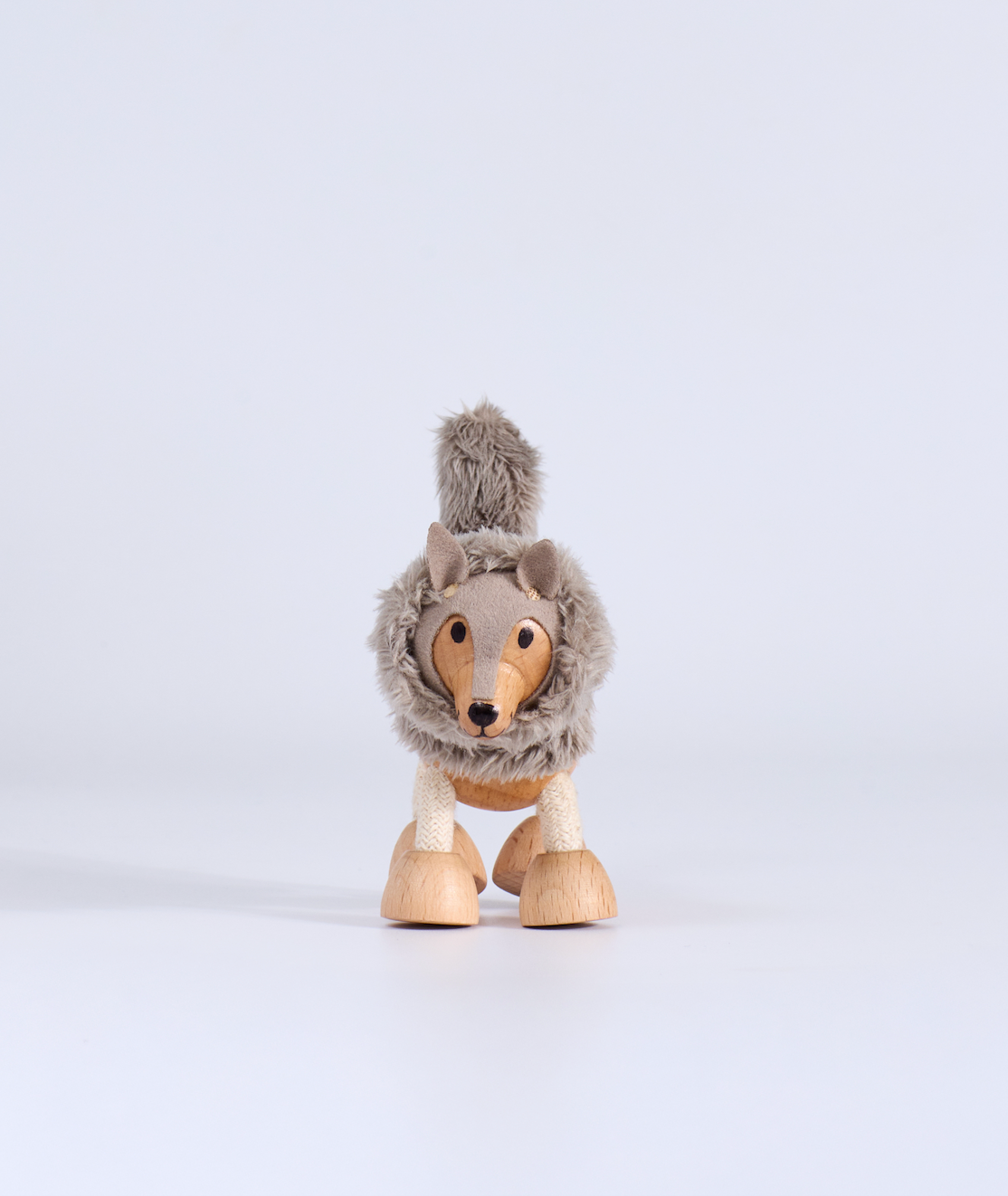
Our wooden wolf figurine is part of the Icebergs collection — beautifully crafted from sustainably sourced timber, celebrating the wild animals of the frozen north.
Shop the Icebergs Collection →
Further Reading & Resources
- Wolf Conservation Center — a leading wolf conservation and education organisation in the USA, with educational resources, live wolf cams, and information on wolf recovery programs.
- WWF — Gray Wolf — WWF's wolf profile covers the species, threats, and conservation efforts across North America, Europe, and Asia.
- National Geographic — Gray Wolf — facts, photos, and videos about grey wolves, ideal for classroom research and independent reading.
- Yellowstone — How Wolves Change Rivers — the remarkable story of how wolf reintroduction transformed Yellowstone's entire ecosystem, explained in accessible language.
- IUCN Red List — Grey Wolf — the authoritative scientific assessment of grey wolf conservation status worldwide.
Explore more animal facts on our Ramblings blog.

Send us a note